In quite a few cases, apartments suffer damage (leaking ceilings, cracked walls, smelly toilets…) and residents report it to building management many times, only to get promises and no action, affecting residents' lives.
“I had lived in my new apartment for almost a year when the toilet began to give off an unpleasant smell. I reported it to building management many times, but they only promised to send someone to check and nobody ever came. Because I couldn't stand the stench, I had to find the cause and fix it myself. It turned out the construction was sloppy: the vent section wasn't fully plastered, so the foul smell in the drain pipe flowed back into the toilet” – Tân (a resident of District 12) shared.
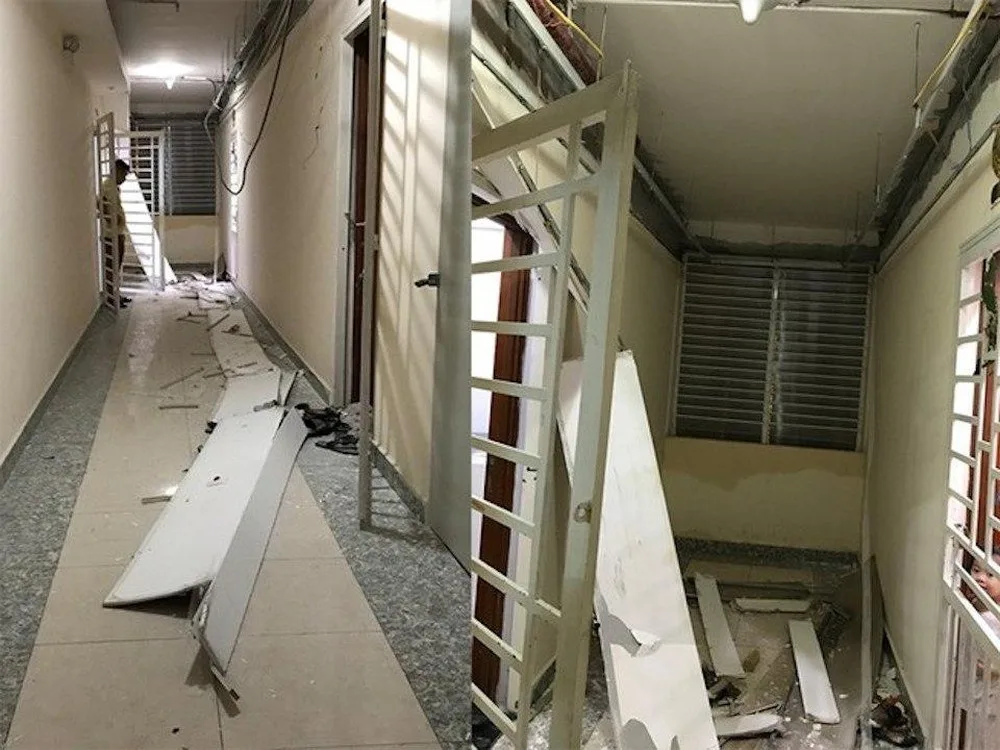
Bình, who also lives in an apartment building in District 12, said that when he received the apartment he saw cracks in the ceiling and thought the paint had not been applied carefully. After moving in he found that the plaster on the concrete ceiling was poor quality and was peeling off. When he reported it, building management sent someone to check, and that person said they would let him know when it would be fixed. But he waited and waited with no repair; when he asked, they said they were busy repairing many units and promised to tell him later when it would be done.
“A few months later I went down to ask building management again, and they told me to submit the request again, saying that because I hadn't followed up, they didn't know and thought it had already been fixed, and hoped I would understand,” Bình said wearily.
On this issue, Lawyer Phạm Thanh Hữu of the Ho Chi Minh City Bar Association shared some points so that residents can protect their legitimate rights.
First, for apartment buildings still under warranty, the developer is responsible for repairing damage to the apartment building.
Under Point a, Clause 2, Article 85 of the 2014 Housing Law, the warranty period for apartment buildings is at least 60 months from the completion of construction and acceptance for use. Therefore, if the developer's apartment sale and purchase agreement states a warranty period of less than 60 months, a warranty period of 60 months applies; if the agreement states a warranty period of more than 60 months, that period applies.
Note that under Clause 3, Article 85 of the 2014 Housing Law, the housing warranty covers repairing and remedying damage to the frame, columns, beams, floors, walls, ceilings, roof, rooftop, stairs, cladding, tiling and plastering, the gas supply system, domestic and lighting electricity supply systems, water tanks and the domestic water supply system, septic tanks and the wastewater and household waste drainage system, remedying cases of tilting, subsidence, cracking and collapse of the home, and other items agreed in the sale and purchase or lease-purchase agreement. For other equipment attached to the home, the seller or lease-purchase lessor provides warranty repair and replacement for the period set by the manufacturer.
Second, for apartment buildings whose warranty has expired.
If the damage is in an area under private ownership, the apartment owner must repair it themselves. Damage in areas and equipment under shared ownership will be handled by the building's residents' board using the maintenance fund.
Third, when an apartment building is damaged in a case covered by the warranty and still within the warranty period, as mentioned above
In this case, residents must notify the building management. If they deliberately drag things out, making promises but not carrying out repairs, residents should proactively require them to put those promises in writing. This avoids the situation of “words that vanish with the wind”: their written commitments to residents then serve as evidence for residents to raise management's wrongdoing with the developer, and may even allow residents to sue the developer in court to demand that it perform its obligations under the apartment sale and purchase agreement and the law.
(Source: Cafeland)