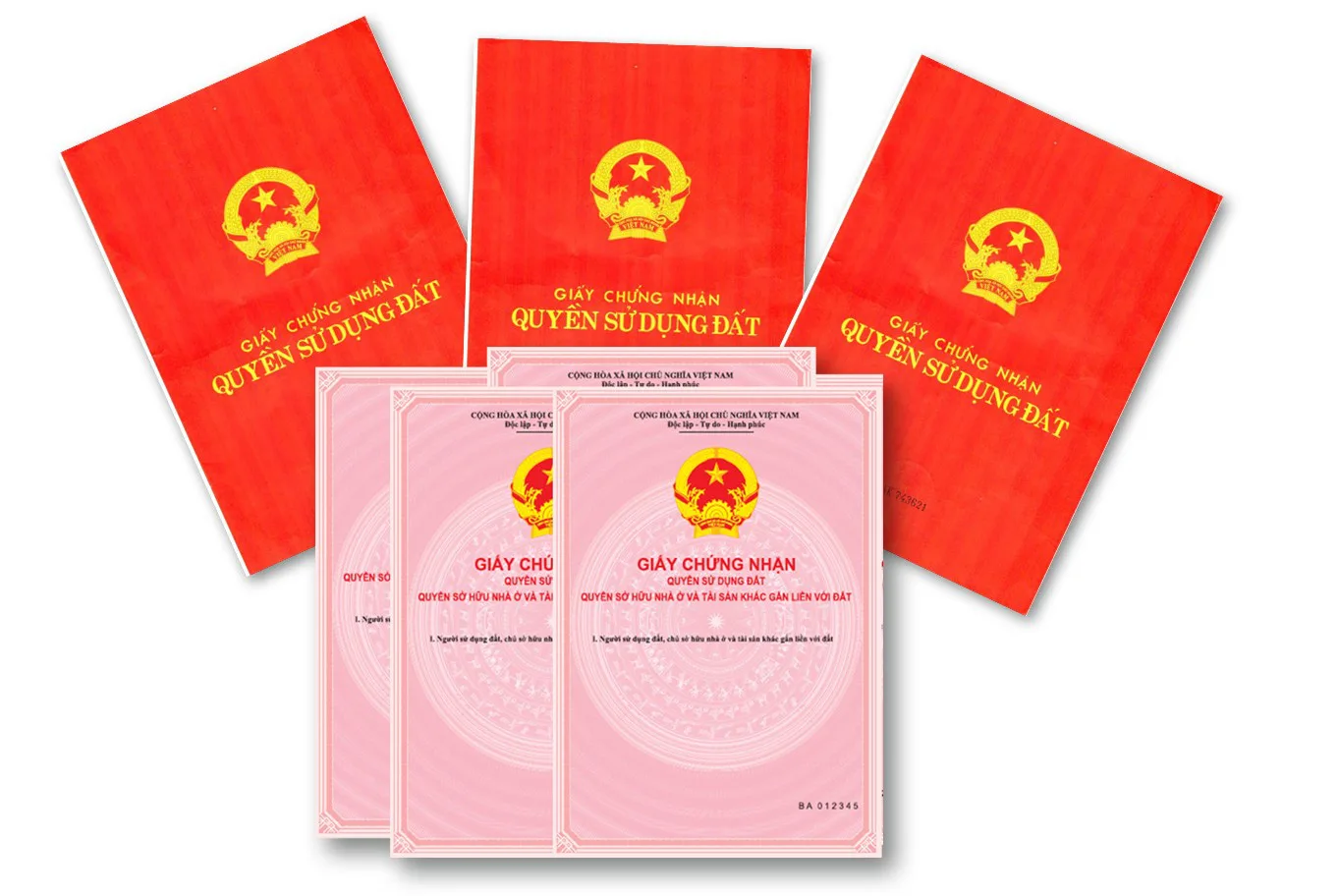
If you need to complete the paperwork to receive a red book (land use rights certificate), note the payments required in the article below.
Land users who want a red book will pay different total amounts depending on the case in which the certificate is issued and on each province's costs.
Clause 3, Article 98 of the Land Law 2013 provides:
“Land users and owners of houses and other assets attached to land are issued the Certificate of land use rights, ownership of houses and other assets attached to land after completing their financial obligations as prescribed by law.”
Under Clause 1, Article 63 of Decree 43/2014/ND-CP, financial obligations include land use fees, land rent, land-related taxes and registration fees, and financial obligations determined by the tax authority.
Note: Where financial obligations are waived or recorded as debt, and where land is leased with annual rent, the Certificate is issued immediately after the competent authority grants it.

When a Certificate is issued, the land user must pay the following amounts as notified by the tax authority:
1. Land use fee
Under Clause 21, Article 3 of the Land Law 2013, the land use fee is the amount a land user must pay the State when the State allocates land with a land use fee, permits a change of land use purpose, or recognizes land use rights.
1.1. When land use rights are recognized
Clause 9, Article 3 of the Land Law 2013 provides:
“State recognition of land use rights means that the State grants land use rights, through the first-time issuance of a Certificate of land use rights, ownership of houses and other assets attached to land for a defined land plot, to a person who is using the land stably and whose land was not allocated or leased by the State.”
Thus, only certain cases issued a Certificate upon recognition of land use rights must pay the land use fee.
1.2. When land is allocated
Under Article 55 and Point b, Clause 1, Article 99 of the Land Law 2013, land users in the following cases must pay the land use fee when issued a Certificate:
– Households and individuals allocated residential land;
– Economic organizations allocated land to carry out housing construction investment projects for sale or for sale combined with rental;
– Overseas Vietnamese and foreign-invested enterprises allocated land to carry out housing construction investment projects for sale or for sale combined with rental;
– Economic organizations allocated land to carry out cemetery infrastructure investment projects in order to transfer land use rights attached to the infrastructure.
2. Land rent
Under Article 56 and Point b, Clause 1, Article 99 of the Land Law 2013, when issued a Certificate in cases where the State leases land, the land user must pay land rent annually or in a lump sum for the whole lease term.
3. Registration fee
Under Articles 5 and 6 of Decree 140/2016/ND-CP (detailed in Article 3 of Circular 301/2016/TT-BTC), as amended by Clause 1, Article 1 of Decree 20/2019/ND-CP, the registration fee when a Certificate is issued is as follows:
Registration fee = (Price per m² of land in the land price table x Area) x 0.5%
The land price is taken from the land price table issued by the provincial People's Committee at the time the registration fee is declared.
The land area is the entire land area legally owned by the organization or individual, as determined by the land registration office and provided to the tax authority.
When land rent is paid in a lump sum for the whole lease term, it can be calculated with this formula:
Land price for the lease term for registration fee purposes = Land price in the land price table / 70 years x Lease term
4. Certificate issuance fee
Under Clause 5, Article 3 of Circular 85/2019/TT-BTC, the Certificate issuance fee is set by the provincial People's Council, so the rate may differ from province to province and city to city.
That is all the information on the costs payable when getting a red book in 2020 in cases such as recognition of land use rights (for example, land left by ancestors that has been used stably over the long term, or reclaimed land) and land allocated or leased by the State. These amounts are financial obligations that land users must complete in order to receive the red book.
Source: Afamily